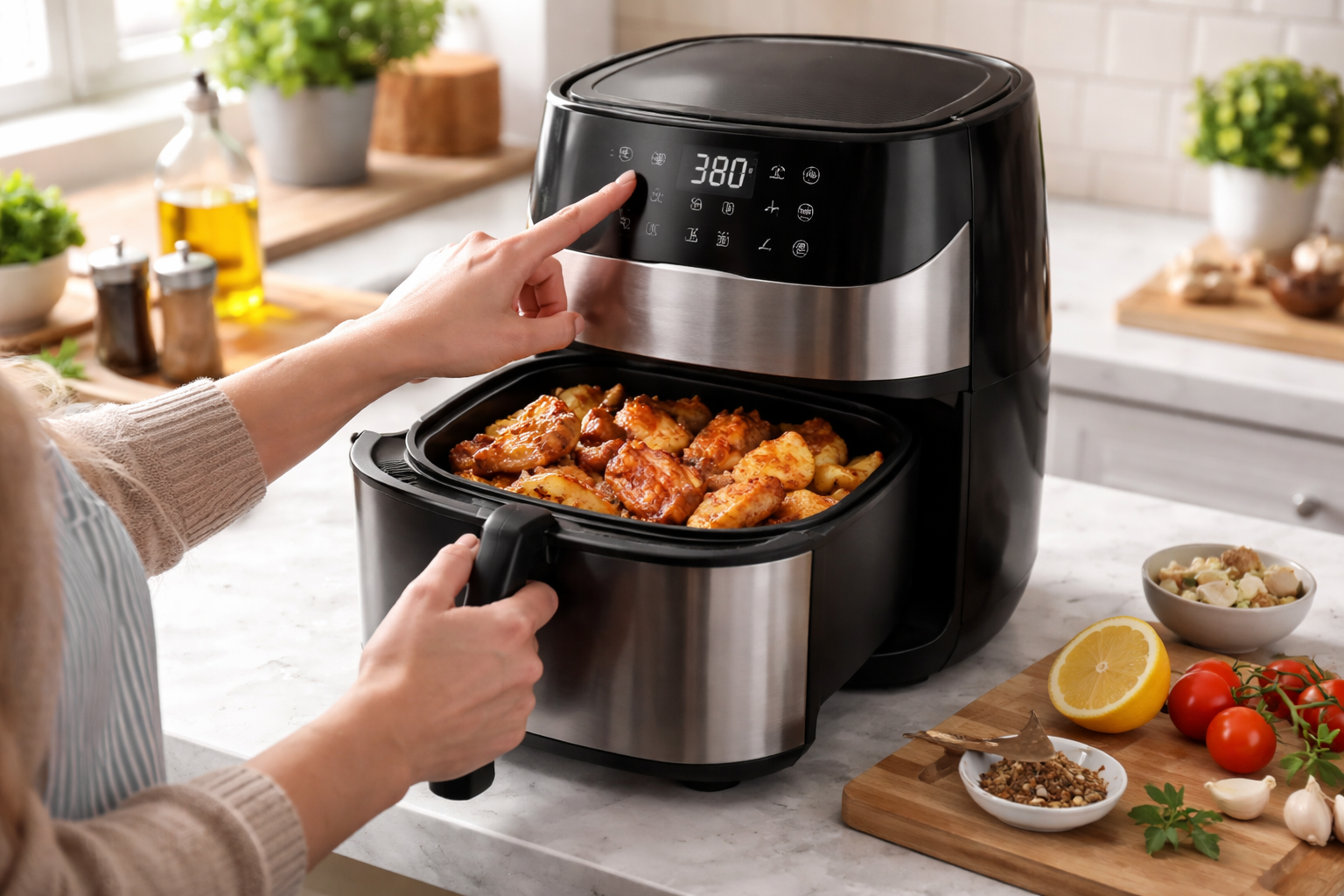
Air fryers have changed how many people cook at home. These countertop appliances use hot air circulation to create crispy, golden food with little to no oil. The result is food that tastes fried but contains far less fat than traditional deep frying methods.
An air fryer works by rapidly circulating hot air around your food, which creates a crispy outer layer similar to frying but without submerging everything in oil. They’re especially good at cooking frozen foods like french fries and chicken nuggets, but they also handle fresh vegetables, meats, and even baked goods. Most home cooks find them faster than heating up a full oven and easier to clean than dealing with pots of hot oil.
The main things to consider when buying an air fryer are size, temperature range, and ease of cleaning. Basket-style models work well for most families, while larger drawer or oven-style units can cook more food at once. Look for models with dishwasher-safe parts and temperature controls that go up to at least 400 degrees Fahrenheit. We tested fifteen air fryers to find the ones that cook food evenly and make cleanup simple.
Table of Contents
- Best Air Fryers of 2026 Ranked
- THE WINNER: Amazon Basics 3.2 Quart Air Fryer
- THE RUNNER-UP: COSORI TurboBlaze Air Fryer
- PODIUM PLACE: Ninja Air Fryer Pro
- Ninja XL Air Fryer
- Cuisinart Air Fryer Toaster Oven
- Emeril Lagasse Extra Large French Door Air Fryer
- Chefman Multifunctional Digital Air Fryer
- NutriChef 6.3 QT Air Fryer
- Ninja Compact Air Fryer
- Buying Guide
- Frequently Asked Questions
Best Air Fryers of 2026 Ranked
We’ve tested dozens of air fryers to find the ones that actually deliver on their promises.
Our top picks crisp up food beautifully, heat evenly, and won’t take up your entire counter.
Here is our ranking for 2026, along with a brief summary of why we picked each air fryer and why it is where it is on the list:
1. Amazon Basics 3.2 Quart Air Fryer
A genuinely solid budget pick for solo cooks or couples. It is compact, quiet, and surprisingly capable for the price, with responsive touch controls and quick cleanup. The small capacity is the limiting factor, and temperature consistency can wobble at startup, but for simple, everyday cooking in a small kitchen, it delivers more than expected.
2. COSORI TurboBlaze Air Fryer
Fast, powerful, and impressively precise, this is a great option if speed matters. The high maximum temperature and multi-speed fan produce even browning with minimal effort, while the ceramic coating makes cleanup almost effortless. Its square basket limits taller foods, and turbo mode needs a gentle hand, but overall performance is excellent.
3. Ninja Air Fryer Pro
A practical, no-nonsense air fryer that handles family-sized portions without overwhelming your counter. It heats quickly, cooks frozen food exceptionally well, and cleans up with minimal effort. The controls can be slightly finicky and it runs louder than some rivals, but it earns its place through reliability.
4. Ninja XL Air Fryer
Designed for bigger meals and busy households, this model offers generous capacity and consistent results. The wide temperature range adds flexibility, and the ceramic basket holds up well to frequent use. It is bulkier than average and the exterior gets warm, but performance remains dependable.
5. Cuisinart Air Fryer Toaster Oven
More oven than basket fryer, this multitasker shines if you want one appliance to do many jobs. Dial controls are refreshingly intuitive, capacity is excellent, and it handles everything from toast to roast chicken with ease. It costs more and takes up space, but versatility is its strength.
6. Emeril Lagasse Extra Large French Door Air Fryer
A full-blown countertop powerhouse. The enormous capacity, French doors, and wide range of presets make it ideal for families and batch cooking. It dominates counter space and is not subtle, but it replaces several appliances in one go.
7. Chefman Multifunctional Digital Air Fryer
Closer to a compact convection oven than a traditional air fryer, this model excels at multi-rack cooking. The window and interior light are genuinely useful, and cleanup is straightforward. Touch controls take getting used to, and the lack of a power button feels outdated.
8. NutriChef 6.3 QT Air Fryer
The standout feature here is steam cooking, which keeps meat noticeably juicier than most air fryers manage. It offers good capacity and thoughtful safety features, though the heavy build and hand-wash basket may deter some buyers. A niche but interesting option.
9. Ninja Air Fryer
Compact, fast, and effective for small families, this model delivers crispy results without heating the whole kitchen. It is loud and limited in capacity, but easy to clean and quick to use. Best suited to households cooking for three or fewer.
We will now look at each product in more detail below.
THE WINNER: Amazon Basics 3.2 Quart Air Fryer
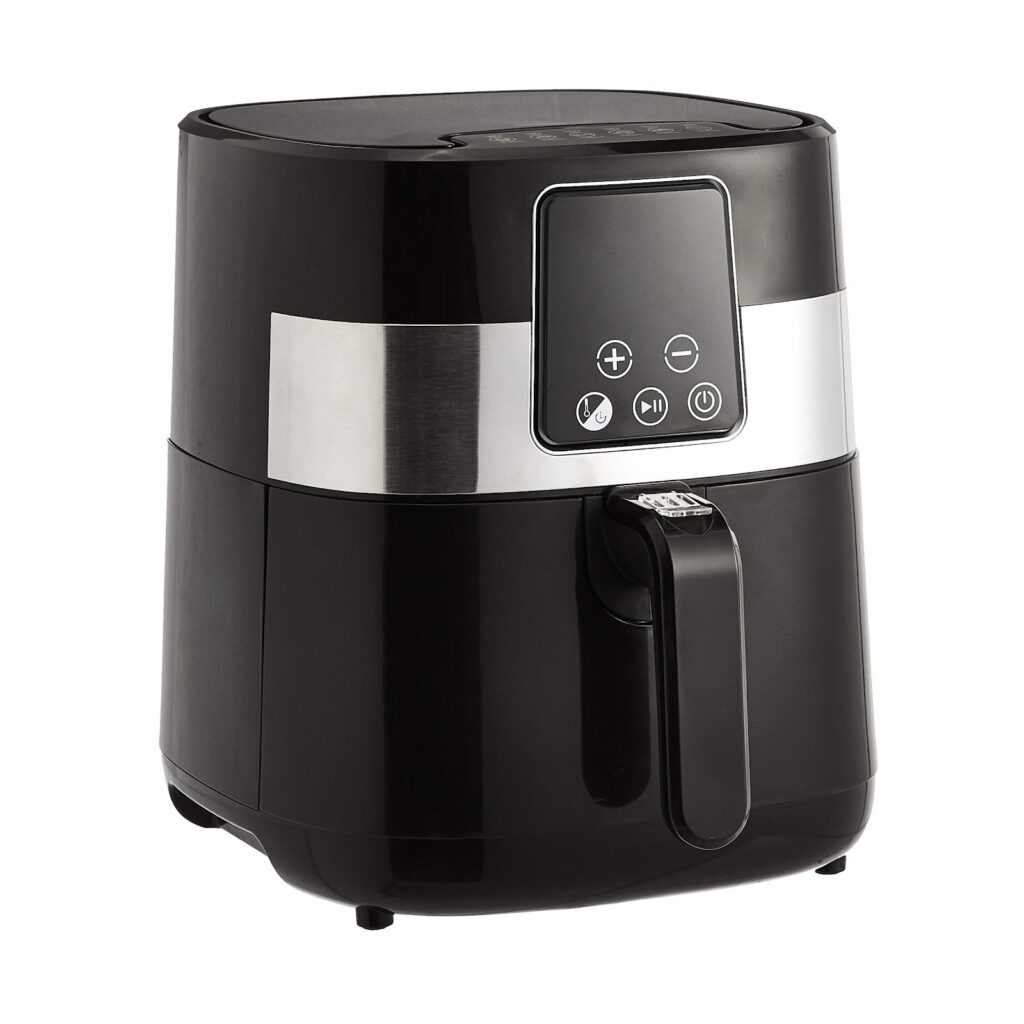
This budget-friendly air fryer delivers solid performance for small households without breaking the bank.
Pros
- Takes up minimal counter space while offering six different cooking methods
- Runs remarkably quiet compared to other models we’ve tested
- The basket detaches easily and cleans up fast
Cons
- The 3.2-quart capacity only feeds one or two people at most
- Temperature settings can be inconsistent when first starting up
- Not ideal if you’re cooking for a family
We fired up the Amazon Basics 3.2 Quart Air Fryer and found it surprisingly capable for the price point. The touch screen controls respond quickly, and switching between air frying, roasting, and baking happens with just a tap.
The compact size means it won’t dominate your counter. But that same size limits how much food you can cook at once. We could barely fit enough chicken tenders for two people without overcrowding the basket.
Cleanup turned out easier than expected. The non-stick basket releases food without much scrubbing, and it’s light enough to handle without wrestling it into the sink. We appreciated the automatic shut-off feature when testing different recipes.
The 1400-watt heating element cooks faster than a conventional oven. We roasted vegetables in about 15 minutes, and frozen fries came out crispy in under 20. The noise level stayed low throughout, which made a nice change from louder models that sound like jet engines.
For single people or couples, this air fryer hits the sweet spot between price and performance. Families will need something bigger, though.
THE RUNNER-UP: COSORI TurboBlaze Air Fryer
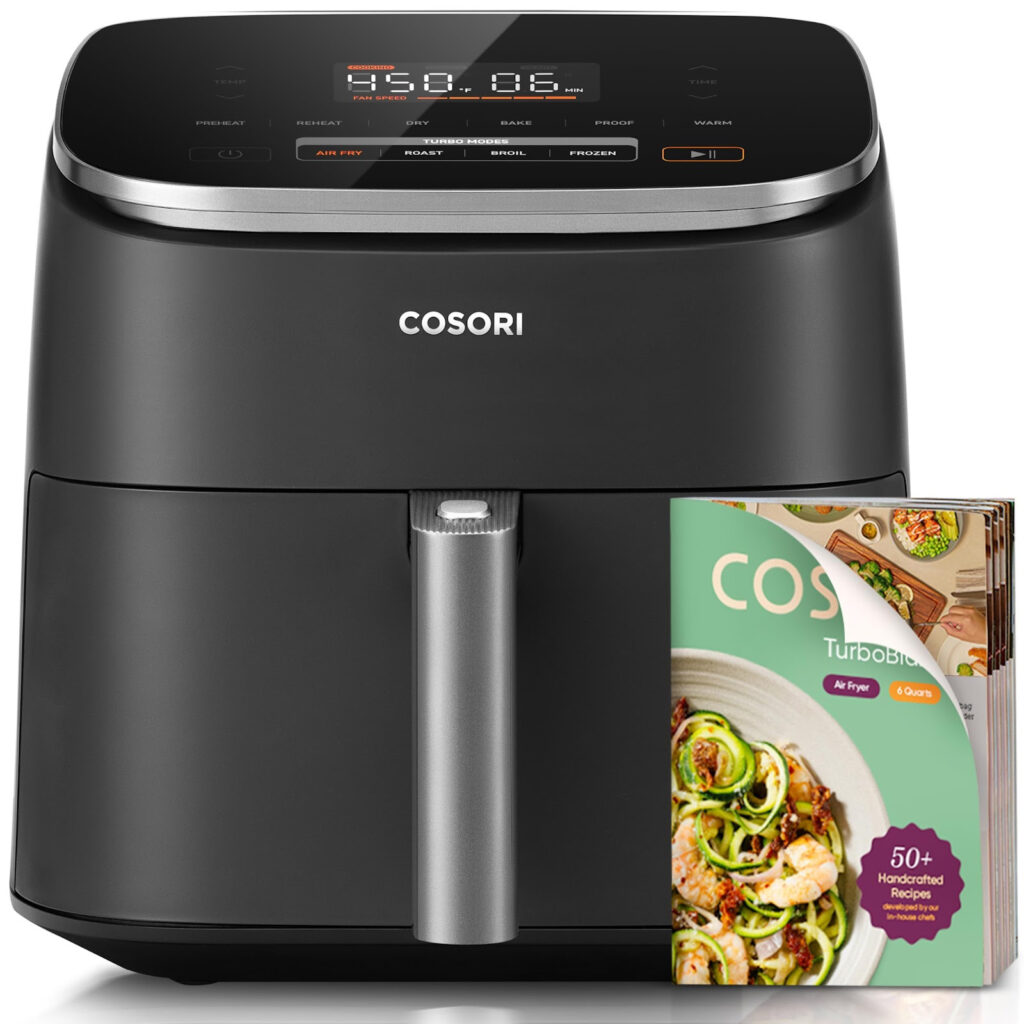
This air fryer is worth considering if you need something that cooks fast and doesn’t take up your entire counter.
Pros
- Heats up to 450°F and cooks noticeably faster than most air fryers we’ve tested
- The ceramic coating really doesn’t stick, and cleanup takes less than a minute
- Runs quieter than we expected, even when we cranked it to the highest setting
Cons
- The square basket shape means it won’t fit a whole chicken like round models can
- You have to be careful with lightweight foods on turbo mode or they’ll fly around
- It’s heavier than it looks at over 13 pounds, so moving it around isn’t fun
We pulled this thing out of the box and immediately noticed how solid it feels. The dark gray finish looks clean, and the basket slides in and out smoothly without that cheap rattling sound some air fryers make.
The TurboBlaze technology isn’t just marketing talk. We threw in frozen fries without preheating, and they came out crispy in about 12 minutes. That’s several minutes faster than our old air fryer managed. The five-speed fan system seems to actually make a difference because we got even browning on chicken thighs without having to shake the basket halfway through.
We were skeptical about the ceramic coating at first. But after cooking sticky teriyaki chicken wings, the basket wiped clean with just a sponge. No scrubbing required. The basket and tray are dishwasher safe, which we used a few times without seeing any wear on the coating.
The six-quart capacity works well for our household. We fit about 20 chicken wings in there, or enough vegetables to feed four people as a side dish. The square shape means you can lay things flat better than in round baskets, though it does limit what you can fit vertically.
One thing caught us off guard. When we tried making kale chips on the turbo setting, the leaves started lifting toward the heating element. We had to switch to a lower fan speed. The manual warns about this, but we learned it the hard way first.
The touch controls respond quickly, and the LED screen is easy to read even in bright kitchen light. Temperature adjustments happen in five-degree increments, which gives you more control than air fryers that only let you pick preset temps. We appreciated being able to set it to exactly 375°F for cookies.
PODIUM PLACE: Ninja Air Fryer Pro
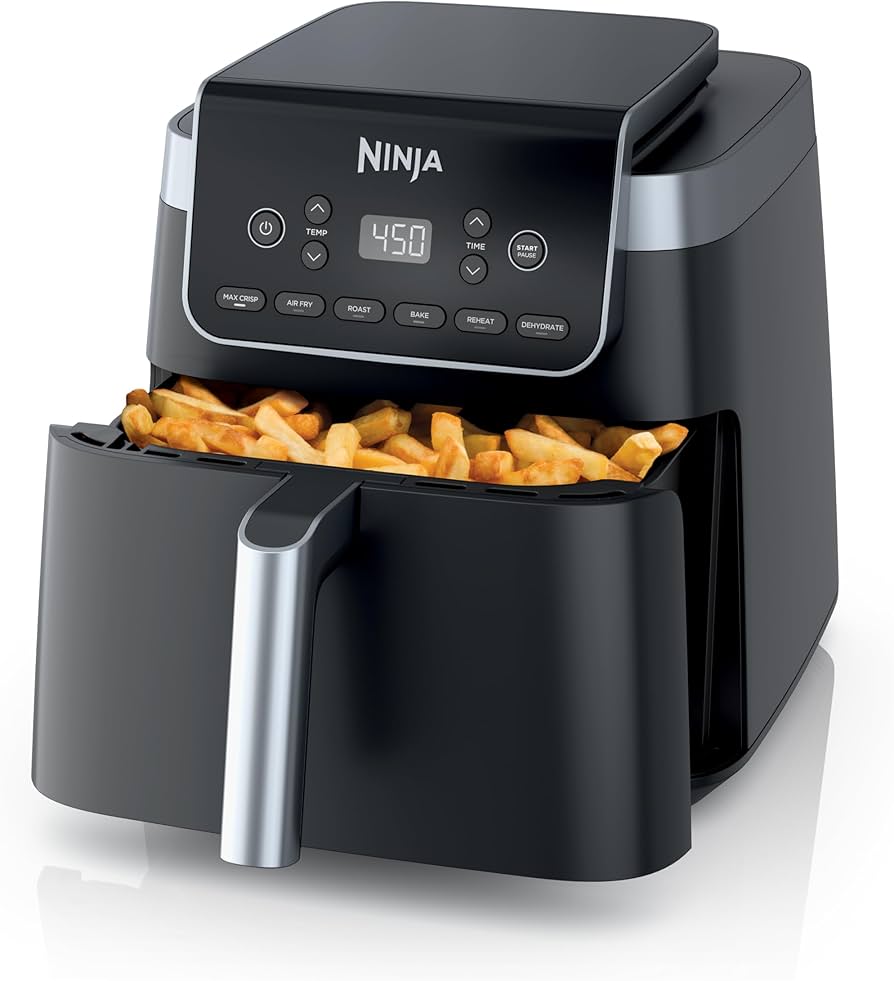
This is a solid choice if you want a straightforward air fryer that actually fits enough food for a family without taking over your entire counter.
Pros
- The 5-quart basket holds way more than you’d expect and we could actually cook a full meal’s worth of chicken wings without crowding
- Cleanup takes almost no effort since nothing sticks to the basket or crisper plate
- It heats up fast and cooks frozen food to a genuinely crispy finish in minutes
Cons
- The buttons are touch-sensitive and sometimes we had to press them twice to get a response
- It’s a bit loud when running, though not unbearably so
- The recipe book that comes with it is pretty basic and doesn’t offer much inspiration
We’ve been using this thing several times a week and it’s become our go-to for quick dinners. The basket slides in and out smoothly, which sounds like a small thing until you’ve burned yourself wrestling with a top-loading model. We threw in frozen fries straight from the freezer and they came out crispy on the outside and fluffy inside.
The four functions cover most of what you’ll actually use. We’ve air fried chicken, roasted vegetables, and reheated leftover pizza that tasted better than it did fresh. The dehydrate function works fine for fruit chips if you’re into that sort of thing.
At 400 degrees, it gets hot enough to give you that deep-fried texture without the guilt or the mess. We noticed the space-saving design really does help since it doesn’t jut out as far as some other models. The grey color looks fine on the counter and doesn’t show fingerprints too badly.
Ninja XL Air Fryer
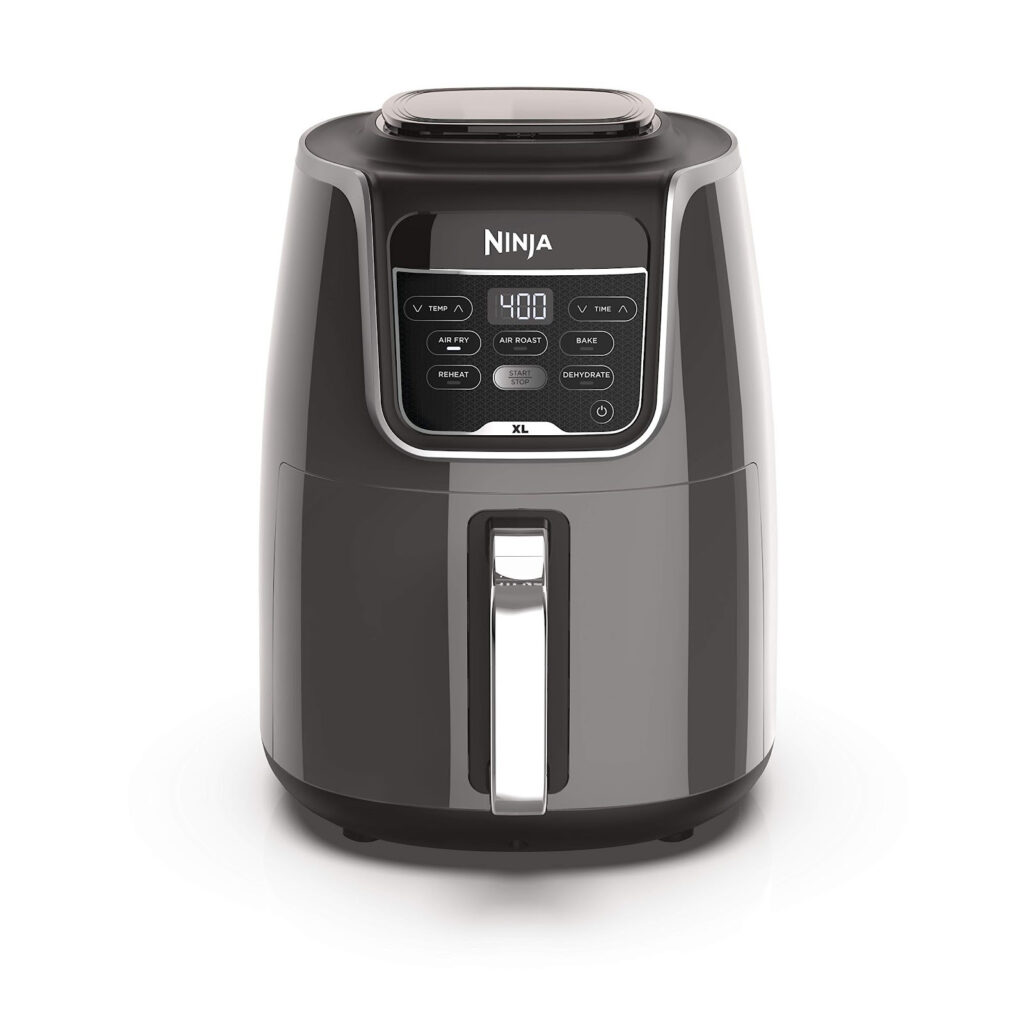
This air fryer delivers consistent results and handles family-sized portions without taking up your entire counter.
Pros
- The 5.5-quart basket fits three pounds of food, which means we cooked dinner for four people in one batch
- Cleaning takes about 30 seconds since everything goes straight into the dishwasher
- Temperature control from 105°F to 400°F works well for both dehydrating apple slices and crisping frozen fries
Cons
- The unit feels bulky at nearly 12 pounds and takes up significant counter space
- We noticed the touch controls can be finicky when our hands are slightly wet
- The exterior gets hot during cooking, so we had to be careful around kids
We’ve been using the Ninja XL Air Fryer for a few weeks now, and it’s become our go-to for weeknight meals. The basket is genuinely large enough to cook a full meal’s worth of chicken wings or vegetables without crowding. When food has room to breathe, it crisps up nicely instead of steaming.
The five cooking functions aren’t just marketing fluff. We actually use the dehydrate setting for making beef jerky and the reheat function brings leftover pizza back to life without making it soggy. The air roast setting cooked a small chicken in about 40 minutes, and the skin came out crispy.
That ceramic coating on the basket lives up to the hype. Nothing sticks to it, even when we forget to spray it with oil. After cooking bacon, we just tossed the basket in the dishwasher and it came out spotless.
The 1750 watts means this thing heats up fast. We’re talking three minutes to preheat, which beats waiting for our old oven. The temperature stays consistent throughout cooking, so we don’t end up with burnt edges and raw centers.
One thing worth mentioning is the noise level. It’s not silent, but it’s quieter than our microwave. The fan runs constantly during cooking, which is how it circulates all that hot air to crisp everything up.
Cuisinart Air Fryer Toaster Oven
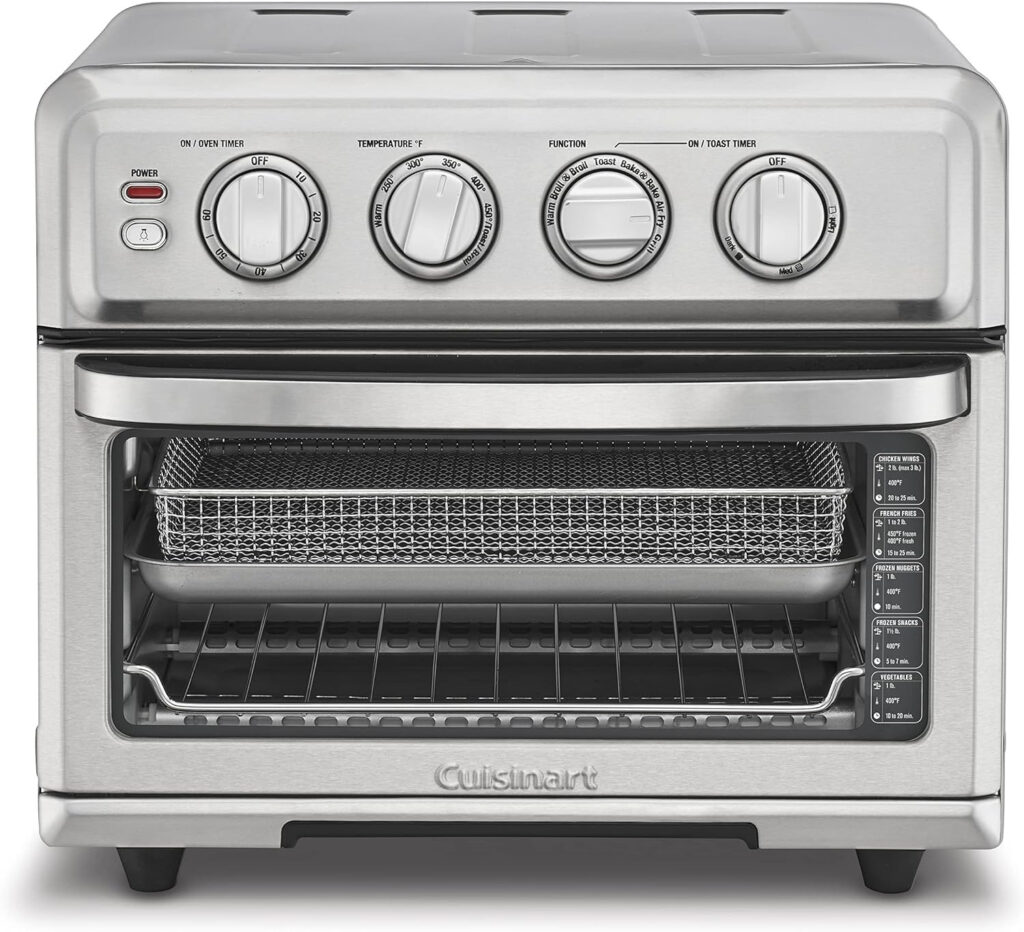
This multitasker handles everything from morning toast to dinner without hogging your entire counter.
Pros
- Simple dial controls that actually make sense instead of confusing digital menus
- Fits a whole chicken or 12-inch pizza with room to spare
- Stays cool enough on the outside that you won’t burn yourself reaching over it
Cons
- Takes up a decent chunk of counter space even though it’s not massive
- The grill plate adds another thing to clean and store
- Gets pricey compared to basic air fryers
We’ve been using the Cuisinart Air Fryer Toaster Oven for a few weeks now and it’s basically replaced our regular oven for small meals. The thing cranks out crispy chicken wings without heating up the whole kitchen, which matters more than you’d think on a hot day.
What really stands out is how straightforward it is to use. You turn a knob to pick your cooking mode, twist another for temperature, and set the timer. Done. No fumbling through digital settings or wondering which button does what.
The dual-sided grill plate is clever but we’ll be honest—we don’t use it as much as we thought we would. It’s great for breakfast when you want eggs and bacon at the same time, but it’s also one more accessory taking up drawer space. The air fry basket gets way more action in our house.
Cleanup isn’t bad since the interior is stainless steel. We just wipe it down after it cools and we’re good to go. The outside stays surprisingly cool too, which is handy when you’re working around it in a cramped kitchen.
The capacity impressed us more than expected. We roasted a four-pound chicken in there without any issues, and it came out with crispy skin all around. Six slices of toast fit easily, though we usually only need two or three at a time.
Emeril Lagasse Extra Large French Door Air Fryer
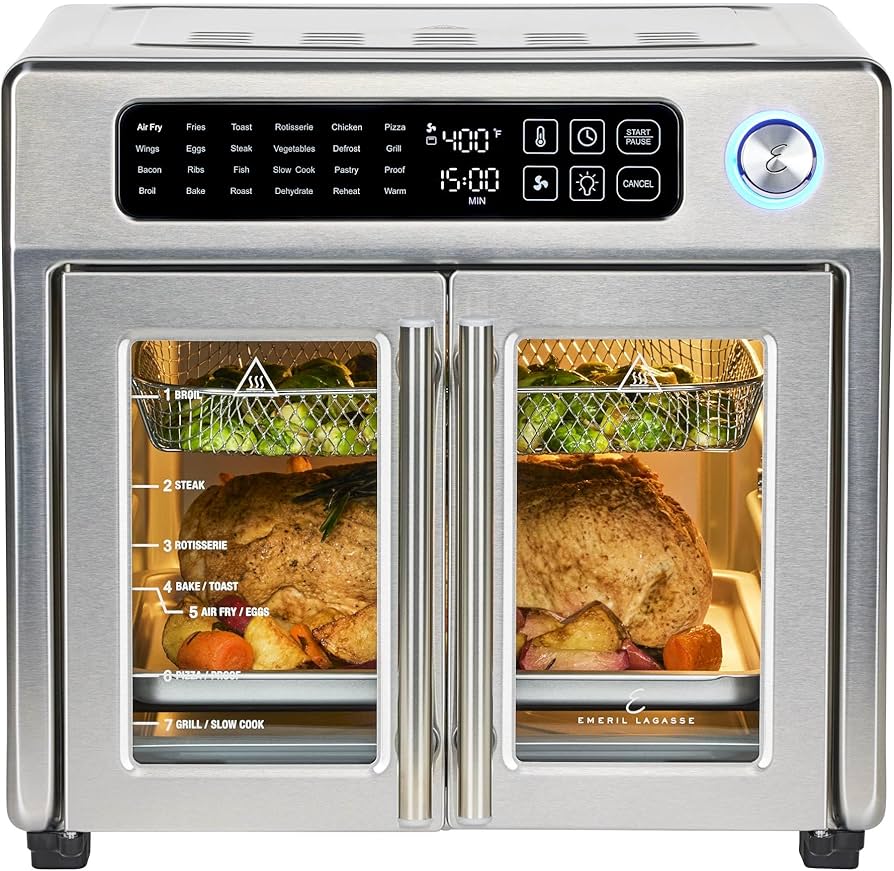
This beast of a machine replaces nearly every appliance on your counter and handles family-sized portions without breaking a sweat.
Pros
- The 26-quart capacity fits a whole chicken or 12-inch pizza with room to spare
- French doors make it easy to check on food and load heavy dishes without awkward angles
- Twenty-four preset functions handle everything from air frying to slow cooking
Cons
- The power cord is short and positioned on the left side, which can be annoying depending on your outlet location
- At over 26 pounds, this isn’t something you’ll move around easily
- The beeping sounds are pretty loud when timers go off
We’ve been using the Emeril Lagasse Extra Large French Door Air Fryer for weeks now, and it’s honestly taken over most of our cooking. The size shocked us at first—this thing dominates counter space—but that room means we can cook for the whole family in one go. We roasted a full chicken last week and still had space around it for vegetables.
The French doors are smarter than we expected. Opening a single door on most air fryers means holding it awkwardly while you juggle hot food, but these swing open together with one pull. The interior light lets us peek without opening anything, which keeps the heat inside where it belongs.
We’ve tried the air fry, bake, and dehydrate settings so far. The dual-speed fan circulates air better than our old air fryer, giving us crispy results without constantly shaking the basket. Toast comes out evenly browned, and the automatic shutoff means we haven’t burned anything yet.
The stainless steel looks nice but shows fingerprints immediately. We wipe it down after each use, which takes maybe thirty seconds. The included accessories—air fry basket, rotisserie spit, bake pan—actually get used instead of sitting in a drawer. Our 8-inch skillet fits inside perfectly for smaller meals.
That short cord bugs us more than it should. Our outlet sits on the right side of the counter, so the left-positioned cord means the unit sits at an angle. Not a dealbreaker, but worth considering before you buy.
Chefman Multifunctional Digital Air Fryer
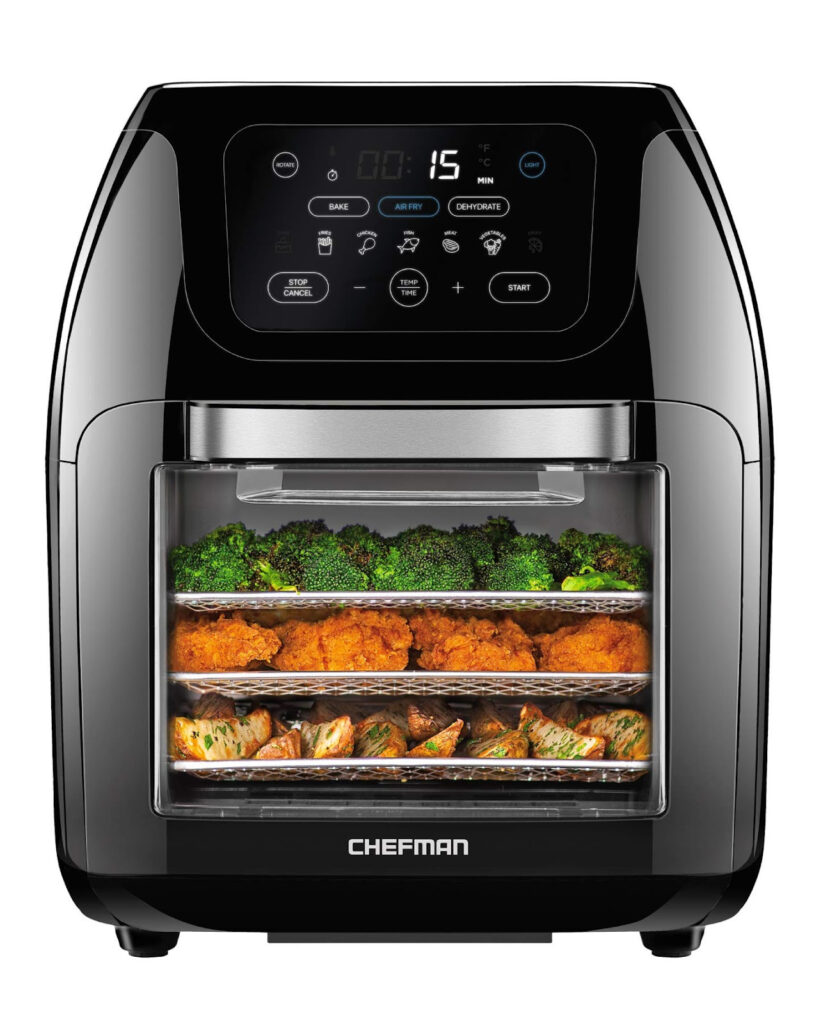
This air fryer works well for families who want multiple cooking options in one machine without spending a fortune.
Pros
- Three removable racks let you cook several items at once
- Large window and interior light make it easy to watch your food cook
- Dishwasher-safe parts make cleanup quick
Cons
- You have to unplug it after each use since there’s no power button
- Takes up considerable counter space at nearly 15 inches tall
- Touch controls can be finicky to use at first
We found the Chefman air fryer to be more like a toaster oven than a traditional basket-style air fryer. The door swings open to reveal three metal racks instead of a pull-out basket. This design lets you cook bacon on one rack while roasting vegetables on another.
The 10-liter capacity fits a whole chicken on the rotisserie spit. We appreciated how the metal interior held up better than some plastic models we’ve tried. The touch screen has 17 preset options, though we mostly stuck to manual settings once we got the hang of it.
Cooking times were faster than our regular oven. We didn’t need to wait for preheating, which saved us time on weeknight dinners. The rapid air circulation made chicken wings crispy without needing much oil.
The large window proved genuinely useful. We could check on food without opening the door and losing heat. The interior light worked well, though it would have been nice if it stayed on longer.
Cleanup was straightforward since the drip tray and racks go in the dishwasher. We did find it annoying that there’s no on/off switch. You have to physically unplug the unit from the wall when you’re done cooking, which feels outdated for a modern appliance.
NutriChef 6.3 QT Air Fryer
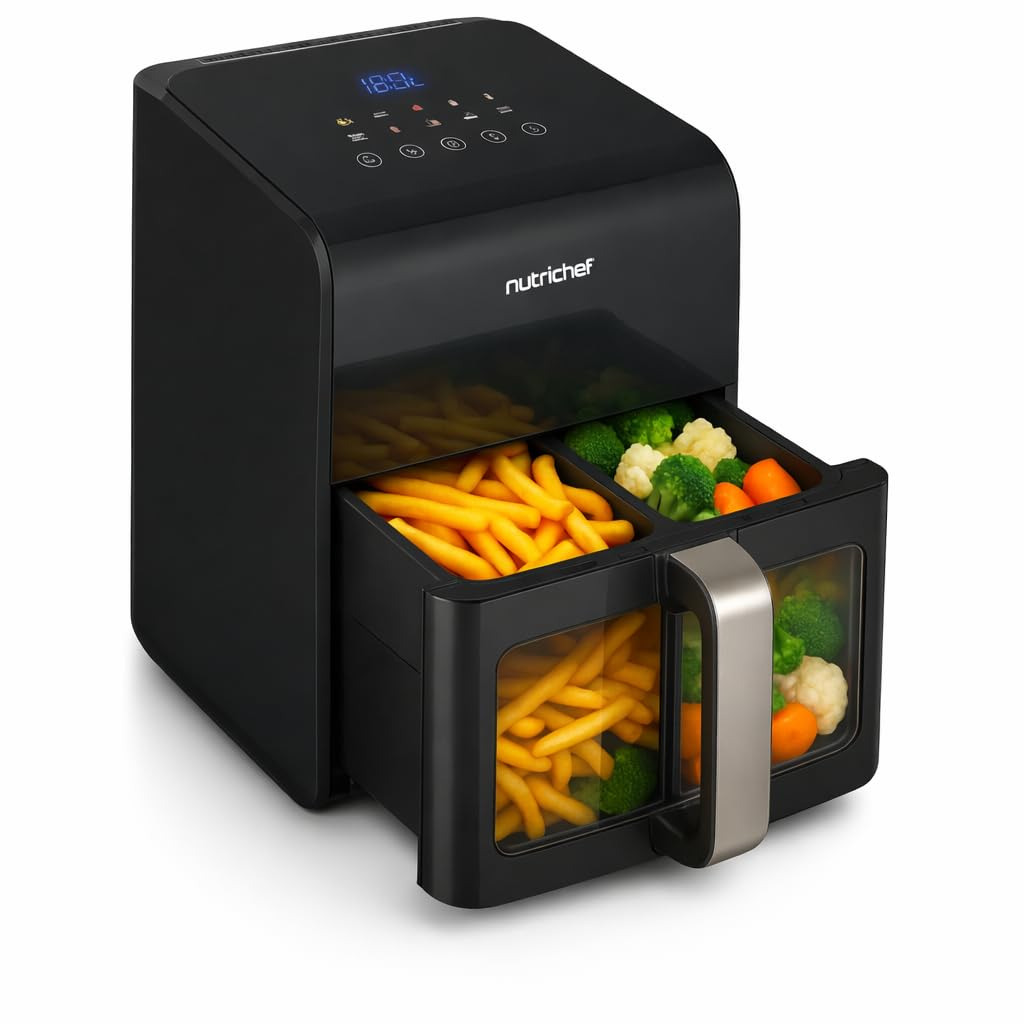
This air fryer stands out with its built-in water reservoir that adds steam while cooking, making it a smart pick if you’re tired of dried-out chicken breasts.
Pros
- The steam function keeps meat juicy instead of turning it into cardboard
- Twelve preset options mean less guesswork when you’re cooking different foods
- The see-through window lets you check on your food without opening the basket
Cons
- At 16 pounds, it’s heavier than most air fryers in this size range
- The basket isn’t dishwasher safe despite the non-stick coating
- Only six customer reviews so far, which makes it harder to gauge long-term reliability
We were genuinely surprised by the water reservoir feature on this NutriChef model. Most air fryers dry out chicken and pork, but adding steam changes the game completely. The meat comes out tender on the inside while still getting that crispy exterior we all want.
The 12 preset functions cover everything from reheating pizza to roasting vegetables. We didn’t need to fiddle with temperature and time settings as much as we expected. The digital display is clear and responds quickly to touches, which sounds basic but some air fryers have frustratingly laggy screens.
That transparent window is more useful than it sounds. We could see when our fries needed shaking without pulling out the basket and losing heat. The 6.3-quart capacity handled a whole chicken with room to spare.
The weight surprised us when we first lifted it. This thing feels solid, which probably means better build quality, but moving it around the counter takes some effort. Hand-washing the basket isn’t a dealbreaker, but we would’ve appreciated dishwasher-safe parts at this price point. The cool-touch handle and automatic shut-off gave us peace of mind, especially when we got distracted by other kitchen tasks.
Ninja Compact Air Fryer
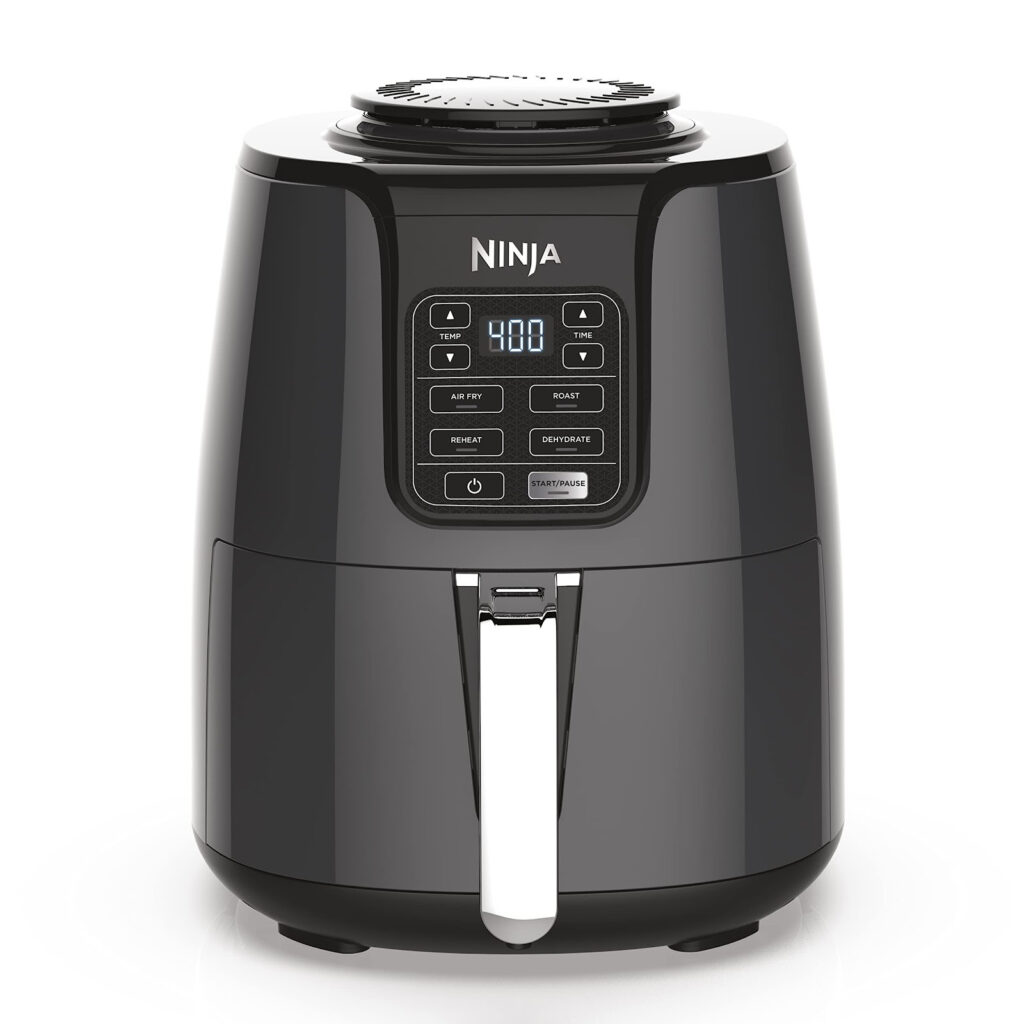
If you want crispy food fast without heating up your whole kitchen, this compact Ninja does the job well for small families.
Pros
- Heats up in seconds and cooks food way faster than a regular oven
- The ceramic basket cleans up easily in the dishwasher
- Takes up less counter space than bigger models while still fitting two pounds of fries
Cons
- The 4-quart size feels cramped if you’re cooking for more than three people
- We noticed the fan runs pretty loud during cooking
- The buttons can be finicky and sometimes need a firm press to register
We’ve been using this Ninja for a few months now, and it’s become our go-to for weeknight meals. It heats up almost instantly, which means we’re not standing around waiting for an oven to preheat. The basket holds enough chicken wings or frozen fries for our family of three, though we’d struggle if we had more mouths to feed.
The ceramic coating is a real win. Nothing sticks to it, and we just toss the basket in the dishwasher when we’re done. We’ve tried everything from reheating pizza to making kale chips with the dehydrate function, and it all comes out crispy.
The temperature range goes from 105 to 400 degrees, which gives us plenty of options. We’ve roasted vegetables at high heat and slowly dehydrated apple slices at low temps. Both worked great. The touch controls are straightforward, though sometimes we have to tap them twice.
Our biggest gripe is the noise. This thing sounds like a hairdryer on high when it’s running. It’s not a dealbreaker, but it definitely fills the kitchen with sound. The size limitation matters too. If you’re cooking for four or more people, you’ll need to cook in batches, which defeats the time-saving purpose.
Buying Guide
When we set out to find the best air fryer, we learned quickly that not all models are created equal. The right choice depends on what you actually need in your kitchen.
Size and Capacity
Size and capacity are the quiet deal breakers of the air fryer world. They rarely get the spotlight, yet they determine whether your new gadget becomes a weeknight hero or an awkward countertop ornament you resent every time you open a drawer.
Start with the obvious but often ignored question: who are you cooking for, really? A compact two to three quart air fryer can feel miraculous if you are feeding one person or reheating leftovers with intent. It is quick, efficient, and slips neatly into a small kitchen routine. Try to cook dinner for four in that same basket and the shine wears off fast. You will be air frying in shifts, eating in stages, and wondering why everything feels harder than it should.
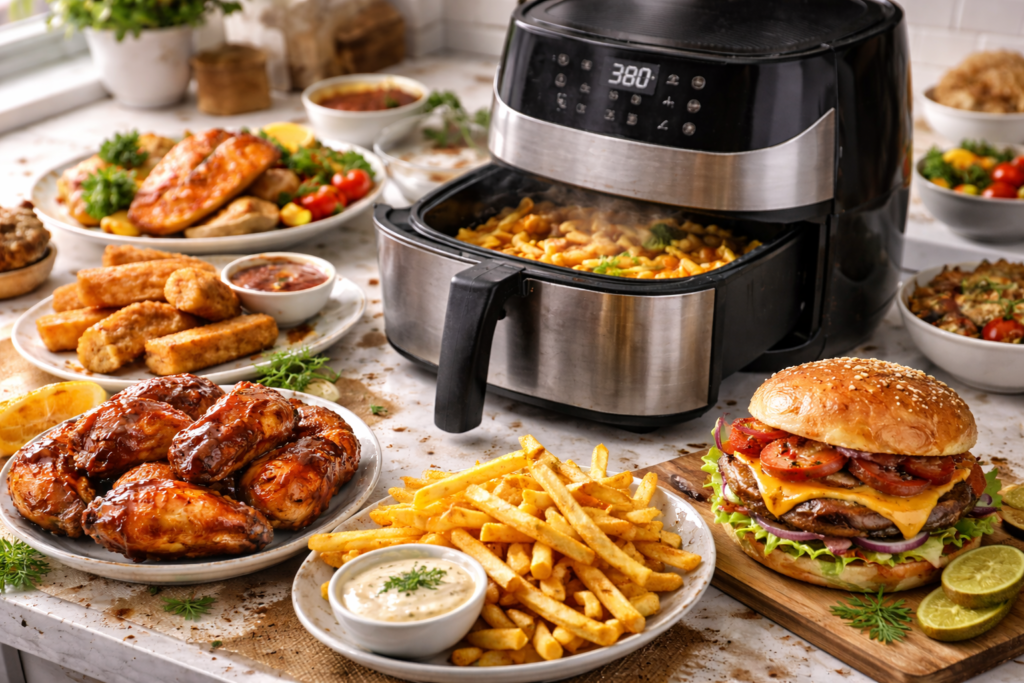
Move up to the five to seven quart range and life gets easier, particularly if dinner involves more than nuggets and fries. Larger baskets allow food to spread out, which matters more than most people realize. Air fryers work by circulating hot air at speed. When ingredients are piled on top of each other, you are no longer frying so much as gently steaming. Crisp skin, golden coatings, and proper browning all depend on space.
Capacity also shapes what you can cook, not just how much. Whole chickens, tray-style vegetables, and family-sized portions of salmon simply demand a bigger footprint. That said, bigger brings its own compromises. Large air fryers take up serious counter space and can feel wasteful if you are only cooking for one or two most nights.
Lifestyle matters here. Families, batch cooks, and enthusiastic leftover people should err on the side of generous capacity. Singles, couples, and anyone playing kitchen Tetris with limited storage will appreciate a more restrained size. Bigger is only better if you actually use it.
Finally, read capacity claims with a raised eyebrow. Brands often quote the maximum volume rather than the usable cooking space. Assume slightly less than advertised and you will avoid disappointment halfway through dinner.
An air fryer should suit the way you cook, not force you to adapt. Get the size right and the rest tends to fall into place.
Power and Temperature Range
Power and temperature range are where air fryers stop being novelty appliances and start revealing what they can actually do. On paper, these specs can look like dry numbers. In practice, they decide whether dinner is fast and satisfying or oddly pale with a side of regret.
Let’s start with power, usually measured in watts. Most air fryers sit somewhere between 1,200 and 2,000 watts, and that gap matters. Higher wattage generally means faster preheating and more consistent heat, which translates to better browning and shorter cooking times. A lower-powered model can still do the job, but it will take longer to get there and may struggle with thicker cuts of food. Think more waiting, more flipping, more patience required.
Temperature range is the other half of the story, and arguably the more interesting one. Many budget air fryers top out around 200°C. That is fine for frozen chips and reheating pizza, but it limits your options. A wider range gives you control, and control is what separates crisp from charred and juicy from dry.
A good air fryer should be able to do all of the following with confidence:
- Reach high temperatures, ideally 220°C or more, for proper browning and crackling skin
- Drop low enough for gentle reheating without turning leftovers into leather
- Hold a steady temperature rather than bouncing around mid cook
- Recover heat quickly when you add food to the basket
Power and temperature also work together. A wide temperature range means little if the machine lacks the muscle to maintain it. This is why some air fryers promise impressive numbers but deliver uneven results. Strong airflow, stable heat, and sufficient wattage form a three-part harmony. Miss one note and the performance suffers.
It is also worth thinking about what you actually cook. If your air fryer diet leans heavily toward vegetables, tofu, and frozen foods, moderate power is usually enough. If you want to roast meats, bake, or recreate oven-like results in half the time, higher wattage and a broader temperature range start to earn their keep.
In short, power and temperature are not about chasing the biggest numbers on the box. They are about flexibility, reliability, and the confidence that your air fryer can handle whatever you throw at it, on a rushed Tuesday or a lazy Sunday alike.
Controls and Presets
Controls and presets are where you find out whether an air fryer is going to feel like a helpful kitchen companion or a small but persistent test of your patience. This is less about raw performance and more about how smoothly the appliance fits into your day, especially when you are cooking on autopilot.
Most air fryers fall into two camps. There are manual models with dials and buttons, and there are digital ones with touch panels and glowing displays. Manual controls are refreshingly direct. You set a temperature, you set a time, and you get on with your life. They are hard to break and easy to understand, which makes them appealing if you value simplicity or share your kitchen with other people who do not want to read a manual.
Digital controls offer more precision, along with a bit of theatre. Exact temperatures, countdown timers, and programmable settings can make cooking feel more intentional, even when you are just heating up last night’s wedges. The downside is that touch panels vary wildly in quality. Some are responsive and intuitive. Others demand repeated tapping and the patience of a saint.
Presets sit somewhere between helpful and gimmicky. In theory, one button for chips, chicken, or vegetables sounds ideal. In reality, not all presets are created equal. The best ones are well calibrated and save time. The worst are vague guesses that still require tweaking.
When weighing controls and presets, look for a few key things:
- Clear, readable displays that make sense at a glance
- Controls that respond quickly without overthinking your input
- Presets that match how you actually cook, not a fantasy menu
- The ability to override presets easily when needed
It is also worth remembering that confidence grows with familiarity. Many experienced users ignore presets entirely after a few weeks, relying instead on instinct and adjustment. That makes ease of manual control more important than an abundance of buttons.
Good controls fade into the background. They do not demand attention or interrupt your rhythm. They simply let you cook, which is exactly the point.
Easy Cleaning
Ease of cleaning is the unglamorous truth teller of the air fryer experience. You can forgive a lot in an appliance that cooks well, but only up to the point where you are standing at the sink, staring down a greasy basket, questioning your life choices.
Most air fryers promise easy cleanup. Fewer actually deliver it. The reality often lives in the details, in the corners where crumbs hide and oil quietly collects. Nonstick coatings help, but they are not a magic spell. The quality of that coating matters, as does how much scrubbing it can survive before it starts to look tired and patchy. A basket that wipes clean with a soft sponge will quickly become a favorite. One that demands soaking, scraping, and negotiation will not.
Design plays a bigger role here than people expect. Smooth, rounded interiors are far kinder than sharp ridges and busy grills. Removable inserts can be a blessing, unless they feel fiddly or awkward to reassemble. Dishwasher-safe parts sound appealing, but they are only useful if you actually trust your dishwasher and do not mind giving up precious rack space for a single appliance component.
Cleaning frequency matters too. Air fryers used daily need to be easy to clean daily. If maintenance feels like a chore, you will start putting it off, and once residue builds up, even the best nonstick surface loses its charm. Lingering smells, sticky drawers, and smoky cooking sessions are often the result of neglect rather than poor performance.
There is also the long view. An air fryer that cleans up easily in the first month but degrades quickly is not a win. Durability, stain resistance, and how the appliance ages all count.
In the end, ease of cleaning is about respect for your time. A good air fryer understands that cooking is the fun part. Cleanup should be a brief afterthought, not the main event.
Extra Features
Extra features are where air fryers start to show their personality. This is the part of the spec sheet that invites curiosity and occasionally suspicion. Some additions genuinely expand what the appliance can do. Others exist mostly to justify a higher price and a longer instruction manual.
Multi-function cooking modes are the most common upgrade. Bake, roast, grill, dehydrate, reheat. In theory, this turns an air fryer into a miniature oven with ambitions. In practice, the value depends on execution. A well designed roasting mode can handle vegetables and meats beautifully. Dehydrating, on the other hand, sounds impressive but is often so slow and capacity limited that it remains a once used novelty.
Smart features deserve a raised eyebrow and an open mind. App control, recipe libraries, and remote monitoring can be useful if they integrate smoothly into your routine. They can also feel unnecessary if you are standing right there in the kitchen anyway. The best smart features save time or reduce guesswork. The worst simply add another thing that needs updating.
There are also the quieter extras that rarely get headline billing but often matter more. Shake reminders prevent uneven cooking. Interior lights let you check progress without releasing heat. Match cook and sync finish functions on dual basket models solve real problems, especially when juggling mains and sides.
Then there is the question of complexity. Every added feature introduces another setting to scroll past and another way to get briefly confused. If an air fryer needs a tutorial to make chips, something has gone wrong.
Extra features should earn their place. They should make cooking easier, more flexible, or more enjoyable. If they do not do at least one of those things consistently, they are just decoration in stainless steel clothing.
Frequently Asked Questions
Are air fryers actually healthier than ovens or deep fryers?
Air fryers are not magic, but they do change the equation. They use significantly less oil than deep frying, which can lower overall fat and calorie intake. Compared to an oven, the difference is smaller, though air fryers often cook faster and encourage crisp results without extra oil. Healthier, yes. Automatically virtuous, not quite.
Do you need to preheat an air fryer?
Sometimes, but not always. Many modern air fryers heat up so quickly that preheating is barely noticeable. That said, starting hot can improve browning, especially for breaded foods and meats. If crispness matters, a few minutes of preheating is usually worth it.
Can you put foil or baking paper in an air fryer?
Yes, with care. Foil and parchment can be useful, particularly for messy foods, but they must not block airflow. Weigh them down with food and avoid covering the entire basket. Air fryers rely on circulation, not containment.
Why does food sometimes cook unevenly?
Uneven cooking is usually a crowding issue rather than a flaw in the machine. Too much food in the basket restricts airflow, leading to pale spots and soggy patches. Shaking or flipping halfway through also helps, even if the recipe insists you do not need to.
Is an air fryer worth it if you already have a good oven?
That depends on how you cook. If you value speed, energy efficiency, and smaller portions, an air fryer earns its place quickly. For large roasts and batch baking, the oven still wins. Many households find that once the air fryer arrives, the oven gets a little lonely.